

What is a No KYC Wallet?
A no KYC wallet is simply a crypto wallet that does not ask you to verify your identity with things like passport scans, selfies, proof of address, or other personal data before you start using it.
Instead, you control your private keys and seed phrase yourself. This means the wallet provider never stores your identity details. That gives you greater financial privacy and autonomy, but also more personal responsibility for security.
It is important to understand that “no KYC” does not make you invisible to the blockchain. Blockchains are public ledgers, so anyone can see addresses and transactions. But with a non-custodial wallet, you remain in control of whether your identity ties back to those wallet addresses.
Also keep in mind that buying crypto with fiat inside some wallets may still involve KYC through third-party services. The “no KYC” label usually refers to the wallet app itself, not every possible feature connected to it.
Table of Contents
Why No KYC Wallets Matter in 2026
As global crypto regulations tighten, especially around identity and anti-money-laundering rules, many people are looking for tools that let them interact with the blockchain without handing over unnecessary personal data. No KYC wallets are part of that privacy-first approach. They give people full control of their assets, without centralized custodians holding keys or personal information.
Non-custodial wallets are especially popular among people who value self-sovereignty, want to interact with decentralized finance, or simply want a way to store tokens securely without linking them to an ID.
That said, using these wallets responsibly means securing your seed phrase, not losing it, and understanding your local laws about crypto reporting and tax obligations.
How No KYC Wallets Work
No KYC wallets are usually non-custodial. That means:
• You generate and control your wallet keys locally on your device
• The wallet provider never copies or stores your identity
• Transactions are broadcast to the blockchain without any identity verification
• Anyone can use them instantly without waiting for approval
There are two main categories:
1. Hot wallets – mobile apps, browser extensions, or desktop apps that are always connected to the internet. Easy to use and ideal for everyday transactions.
2. Cold wallets – hardware devices or air-gapped systems that keep keys offline. Best for long-term storage and highest security.
5 Best No KYC Wallets in 2026 (Side by Side)
Below is a clear, side-by-side comparison of the best no KYC wallets you can use in 2026 without giving up your identity.
1. Best Wallet – All-in-One Privacy Wallet
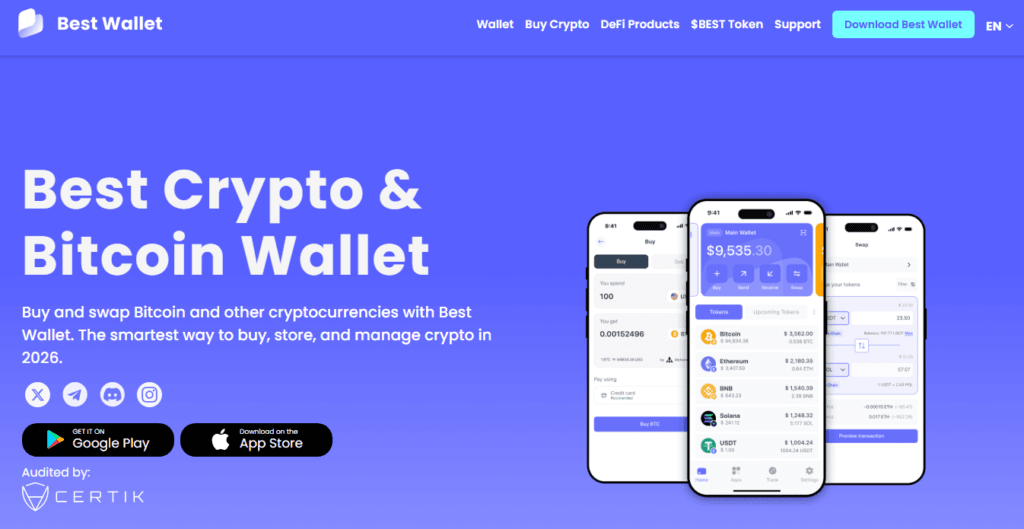
Type: Hot wallet, multi-chain
Why it’s great: Lets you send, receive, and store crypto without any identity checks. Supports 50+ blockchains and thousands of tokens. DEX access is built in so you can swap assets without external KYC-bound exchanges.
Best for: Beginners and casual users who want privacy and broad chain support.
Notes: Buying crypto with fiat inside the app may still require KYC from partners, but wallet creation itself does not.
2. Bitamp – Simple Browser Wallet (No Email Needed)
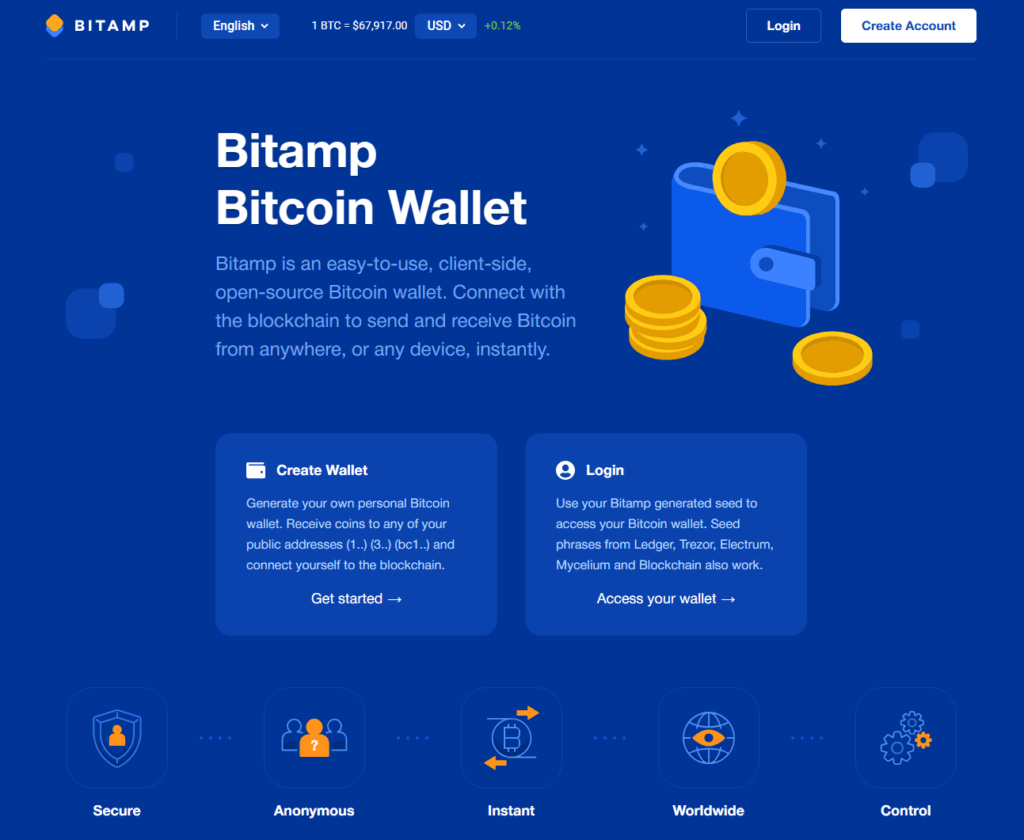
Type: Hot wallet (web-based)
Why it’s great: No email, no account creation, no personal info required. Just open the site and generate your wallet. Your private key stays in your browser.
Best for: Bitcoin users who want a super-simple, no-friction wallet.
Notes: Currently mainly supports Bitcoin. Keep your seed phrase safe.
3. MetaMask – Self Custody for Chains and DeFi
Type: Hot wallet (mobile + browser extension)
Why it’s great: Extremely popular Ethereum and EVM-compatible wallet that controls your private keys and does not do KYC on wallet setup.
Best for: Anyone using Ethereum, BNB Chain, or other smart contract ecosystems.
Notes: “No KYC” applies to the wallet itself. Some third-party services inside the app might ask for identity if you use fiat features.
4. Trust Wallet – Easy Mobile Option
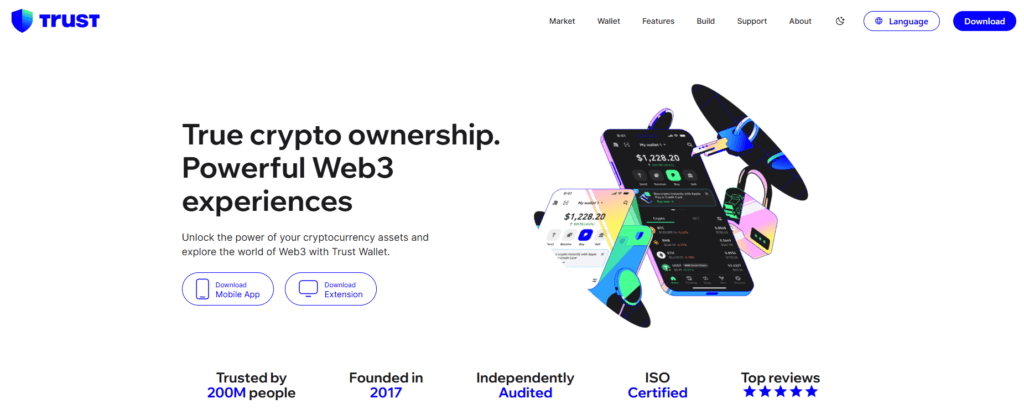
Type: Hot wallet (mobile)
Why it’s great: A non-custodial mobile wallet with multi-chain support and no strict identity gate for wallet creation.
Best for: Mobile users who want a one-stop wallet for tokens and DApps.
Notes: Like most software wallets, it gives you full control of your keys.
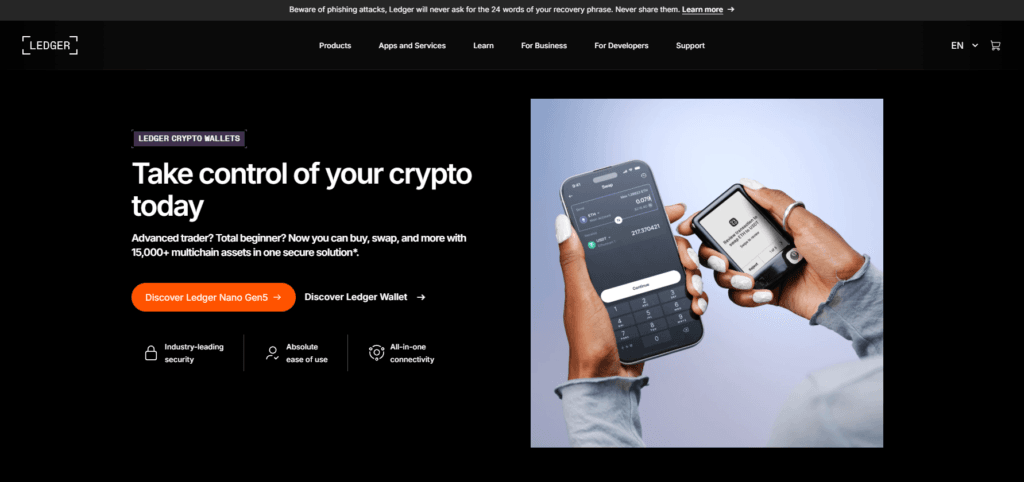
5. Ledger (Hardware Wallet) – Cold Storage Privacy
Type: Hardware wallet
Why it’s great: A physical device that stores your keys offline. You do not provide personal information to use it. It’s one of the safest ways to hold crypto.
Best for: Long-term holders and anyone storing large amounts of crypto.
Notes: Ledger devices support thousands of coins. Pair it with a hot no KYC wallet for daily use if needed.
Quick Comparison Table
| Wallet | KYC at Setup | Type | Best For |
| Best Wallet | No | Hot | Multi-chain privacy beginner |
| Bitamp | No | Hot | Simple Bitcoin users |
| MetaMask | No | Hot | DeFi & smart contract users |
| Trust Wallet | No | Hot | Multi-chain mobile users |
| Ledger | No | Cold | Secure storage |
(Data compiled from market studies and wallet reviews in 2026)
Final Thoughts
No KYC wallets are not magic privacy tools. They simply mean the wallet itself does not ask for your real-world identity when you create or use it. You still need to practice good security by backing up your seed phrase, avoiding phishing links, and not reusing addresses in ways that link back to your identity.
Still, if privacy, self custody, and control are important to you, these wallets are some of the best options available in 2026.